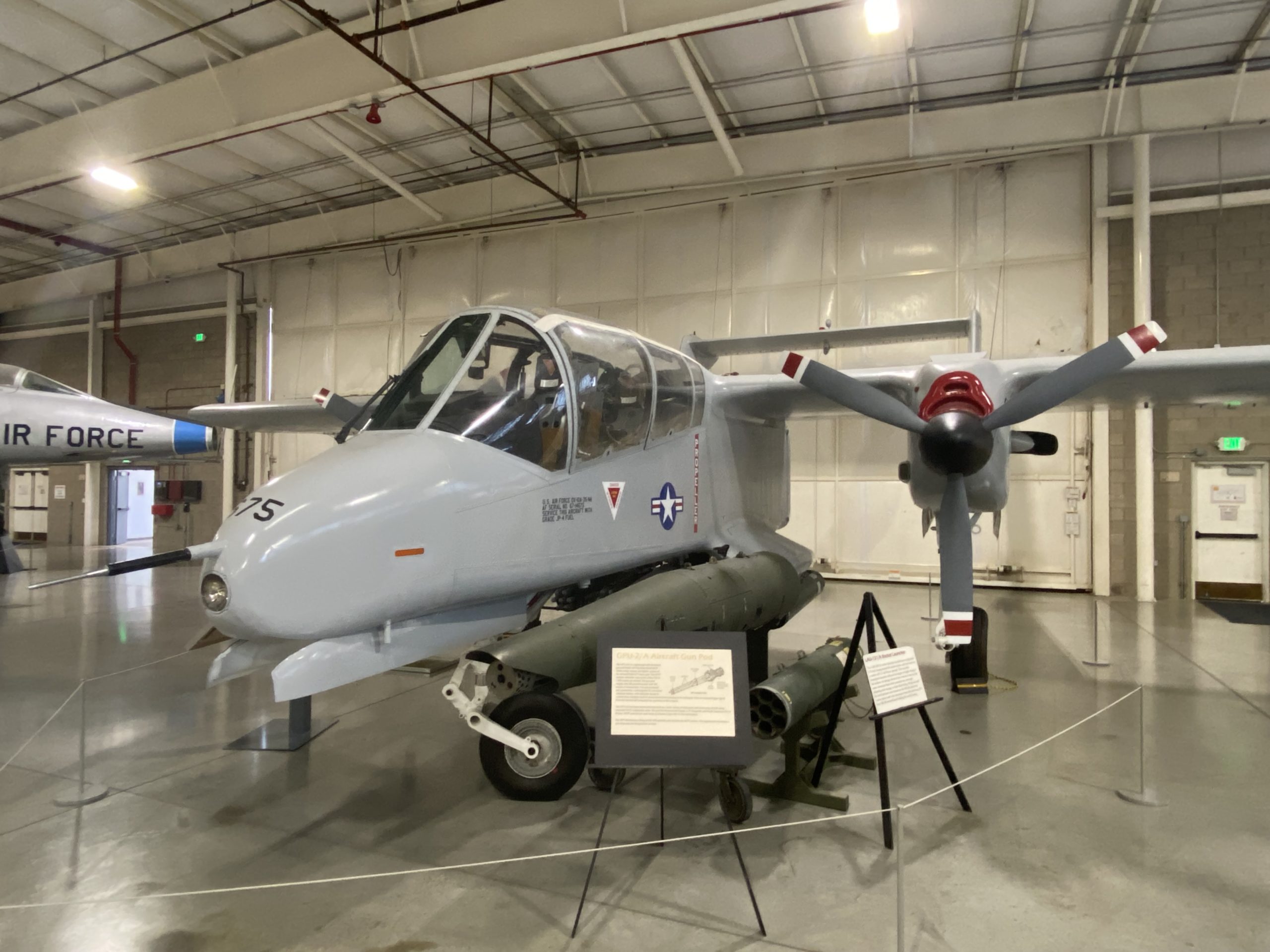
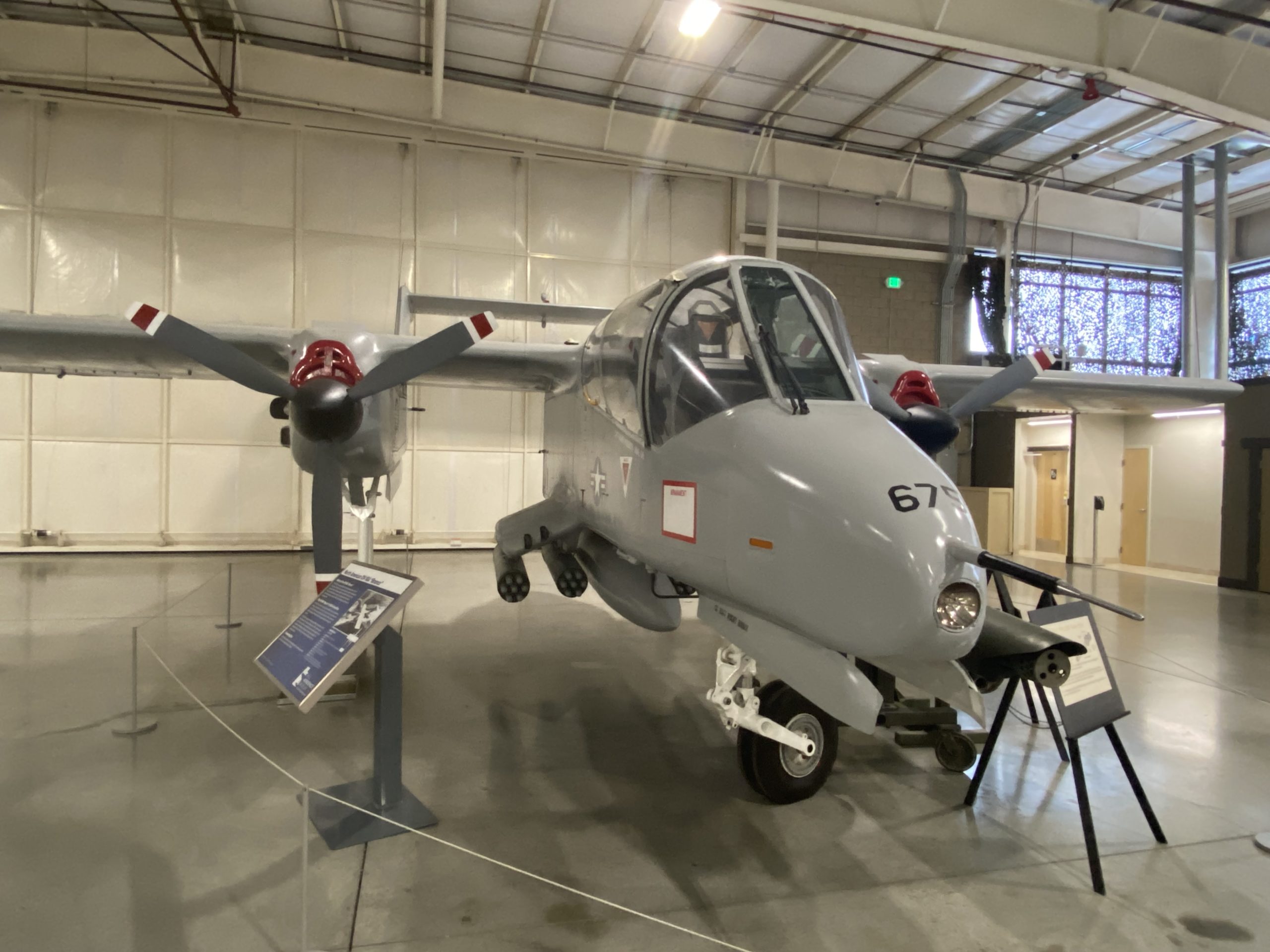
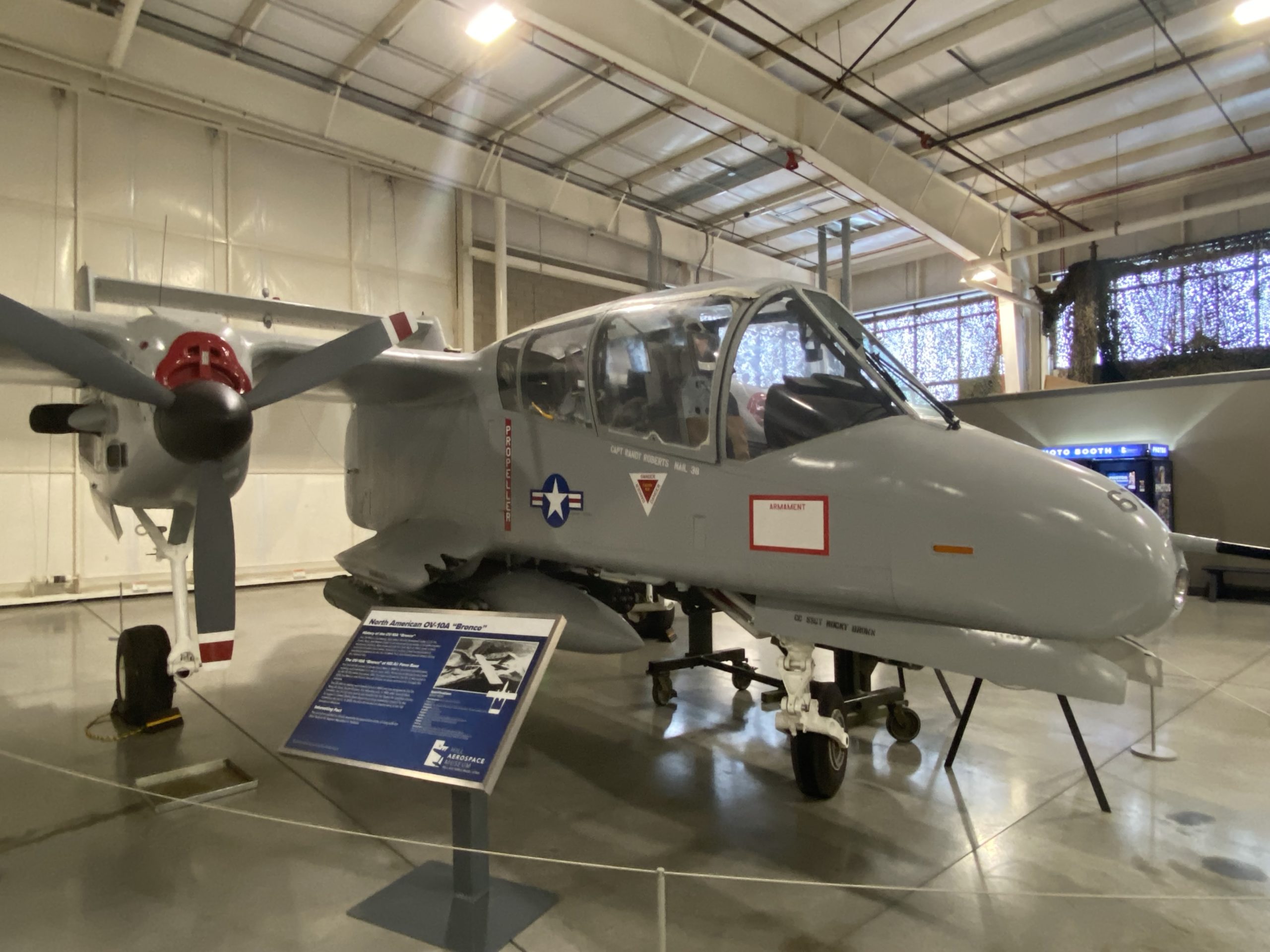
The Bronco flew combat missions as recently as the 1990s, supporting U.S. Marine operations during Operation Desert Storm.

The OV-10A is a turboprop, light attack aircraft developed under a United States (US) Air Force, Navy and Marine Corps tri-service program to create a versatile, counterinsurgency airplane. After these aircraft first took flight in 1967, some of their missions included observation, forward air control, armed reconnaissance, interdiction missions on the Ho Chi Minh Trail and limited ground attack during the Vietnam War.
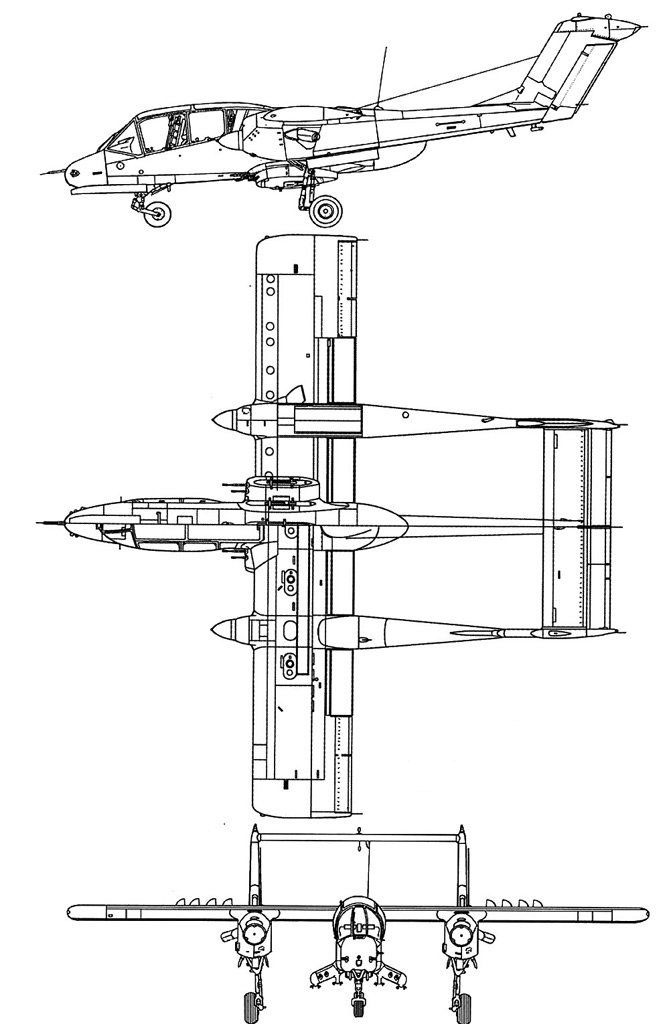
Serial Number: 67-14675
Manufacturer: North American Aviation
Crew: One
Engines: Two Garrett-AiResearch T76-G turboprops; 715 horsepower each
Wingspan: 40 feet
Length: 41 feet 7 inches
Height: 15 feet 1 inch
Weight: 7,190 pounds (empty); 14,444 pounds (maximum)
Speed: 223 mph (cruising); 281 mph (maximum)
Range: 1,240 miles
Service Ceiling: 26,000 feet
Armament: Centerline station for 20mm gun pod or stores; four 7.62mm M60 machine guns in sponsons; 4 sponson stations for rockets, miniguns or stores; two wing stations for rockets or missiles
Cost: $480,000
Hill Air Force Base began OV-10 maintenance operations in 1988. Local efforts included structural refurbishment, rewiring and installation of a secure voice radio. Maintenance personnel at Hill Air Force Base performed work on this airframe into the 1990s. In addition to maintenance, Hill Air Force Base was also home to the Mature and Proven Aircraft Division and unit that directed OV-10 lifecycle management for this weapon system.
The OV-10A on display was manufactured in 1968 and was assigned to the Da Nang Air Base, South Vietnam, the following year. In 1991, after several base transfers, the aircraft was sent to and modified by the Ogden Air Logistics Center to support a US State Department drug interdiction project for the Colombian Air Force. In 2006, the aircraft was put on display here at Hill Aerospace Museum.
The Bronco flew combat missions as recently as the 1990s, supporting U.S. Marine operations during Operation Desert Storm.
The OV-10 was conceived as a light attack and observation aircraft, primarily used as a forward air control aircraft, capable of taking off from short and improvised runways.
The Bronco would cruise at 223 mph, with a max speed of 281 mph.
360 Bronco were built by North American Rockwell, between 1965 and 1986.